
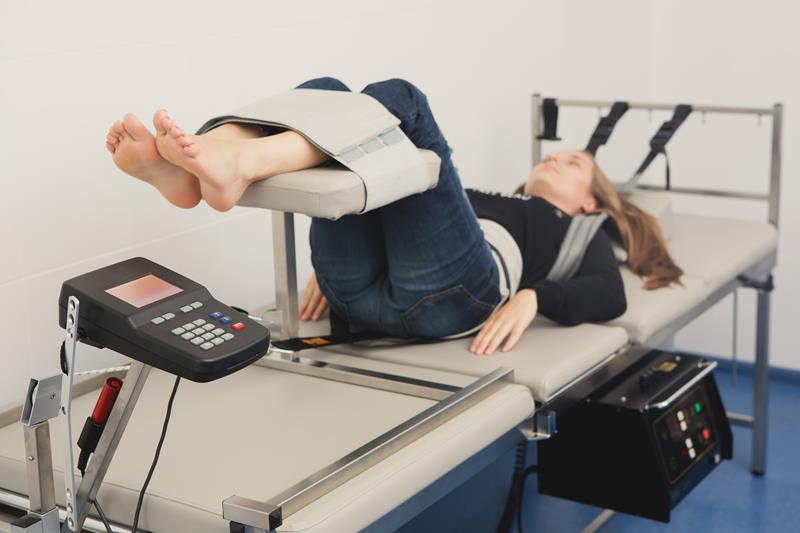
If you’ve been living with chronic back or neck pain, radiating leg or arm pain, or have been told you have a herniated or bulging disc, spinal decompression therapy may be the relief you’ve been looking for. At Summit Spine and Sport Chiropractic, we use spinal decompression as part of a comprehensive approach to disc-related pain — helping take pressure off compressed nerves and giving damaged discs the environment they need to heal.
This is a non-surgical, non-invasive therapy that’s easy on your body. Most patients find it relaxing, and many notice meaningful improvement after just a handful of sessions.
Request an AppointmentHow Spinal Decompression Works
Spinal decompression therapy uses gentle, controlled traction to create negative pressure within the spinal discs. This negative pressure — or decompression — helps retract herniated disc material away from the nerves it’s pressing on, while also encouraging nutrient-rich fluids and oxygen to flow back into the disc. Over time, this promotes healing from within.
During a session, you’ll lie comfortably on a specialized table while the system applies precise, rhythmic stretching forces to the targeted area of your spine. There’s no sudden jerking or cracking involved — just a smooth, therapeutic pull that your body responds well to.
Conditions Spinal Decompression Can Help
Spinal decompression is most effective for conditions that involve disc compression, nerve irritation, or structural narrowing in the spine. It’s commonly used to treat:
- Herniated or bulging discs
- Degenerative disc disease
- Sciatica and radiating leg pain
- Neck pain with arm numbness or tingling
- Spinal stenosis
- Chronic low back pain
- Failed back surgery syndrome (in eligible patients)
- Pinched nerves
What to Expect During Your Sessions
After your initial evaluation, we’ll determine whether spinal decompression is the right fit for you and design a treatment plan around your specific diagnosis and goals. A typical session lasts between 20 and 30 minutes. Many patients read, rest, or even doze off during treatment.
Spinal decompression works best as part of a broader care plan. We often combine it with chiropractic adjustments, soft tissue therapy, and corrective exercises to maximize your results and prevent the problem from returning. We’ll guide you through every step and adjust the plan as your body responds.
Is Spinal Decompression Right for You?
Not everyone is a candidate for spinal decompression, and we take that seriously. During your exam, we’ll review your imaging, medical history, and current symptoms to make sure this therapy is safe and appropriate for your condition. If you’ve been wondering whether decompression could help you — or if you’ve tried other treatments without lasting results — we’d encourage you to come in for a consultation.
Request an AppointmentFrequently Asked Questions
Is spinal decompression the same as traction?
They’re related but not identical. Traditional traction applies a steady pull to the spine, while modern spinal decompression uses a computer-controlled system to deliver precise, variable forces at specific angles. This allows us to target individual disc levels more accurately and create the true negative pressure needed for disc retraction and fluid exchange.
Does spinal decompression hurt?
For most patients, spinal decompression is comfortable — even pleasant. The sensation is a gentle stretching feeling. If you have an acute flare-up or significant inflammation, the first few sessions may be slightly uncomfortable, but we monitor your response closely and adjust as needed.
How many sessions does it take to see results?
Results vary depending on the condition and its severity. Many patients begin to notice improvement within 6 to 10 sessions. A full course of treatment often ranges from 15 to 25 visits. We’ll set clear expectations at the outset and check in on your progress throughout.
Can spinal decompression help me avoid surgery?
For many patients with herniated discs or sciatica, conservative care including spinal decompression is an effective alternative to surgery. While we can’t guarantee any specific outcome, a significant number of our patients have been able to avoid surgical intervention by pursuing non-invasive care first. We always recommend exploring conservative options before considering surgery.
Do you offer spinal decompression at both your Rexburg and Idaho Falls locations?
Yes — both of our locations are equipped to evaluate and treat patients with disc-related conditions. Contact us to schedule at the location most convenient for you.
Will my insurance cover spinal decompression?
Coverage varies by plan and provider. Our team will help you understand your benefits and discuss your options. We’re committed to making care accessible and will work with you to find a path forward that fits your situation.